
2026-08-29 ·
Dealing With Wasp Nests Near Pryor Play Areas
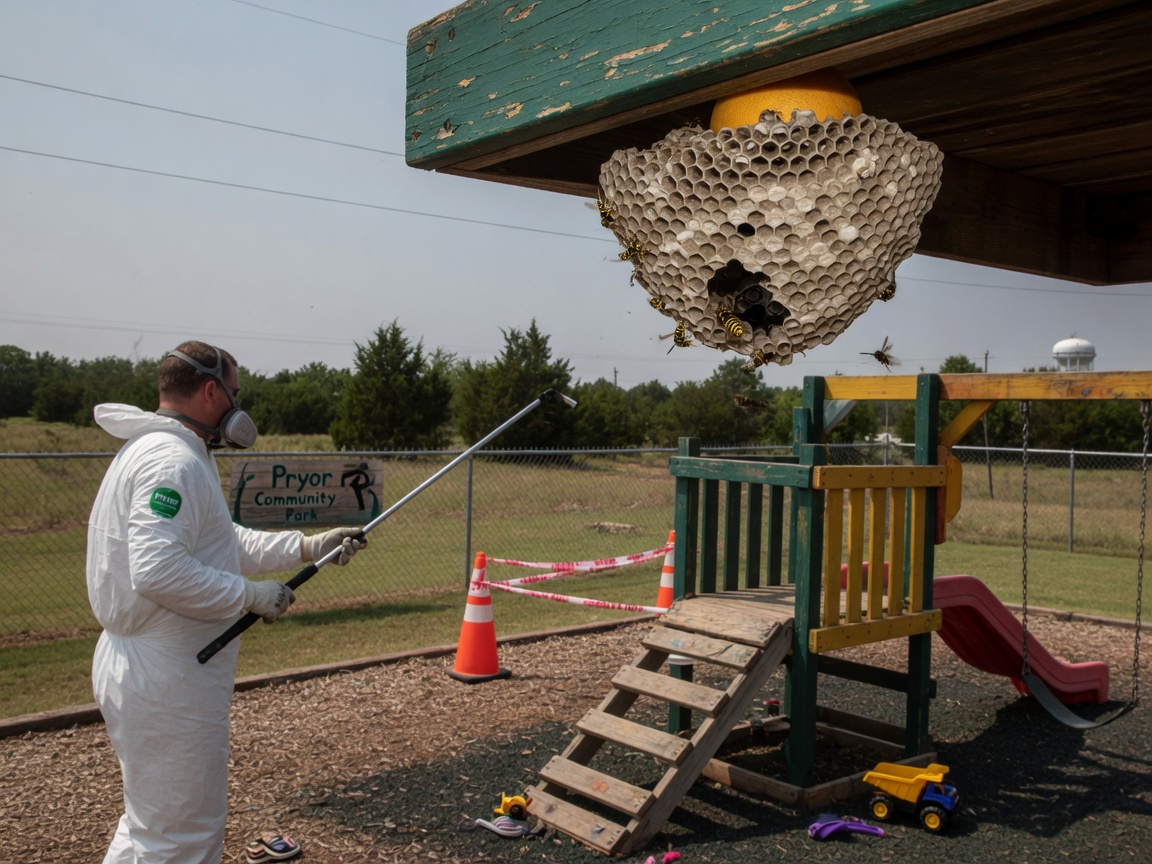
Wasp nests near play areas in Pryor require professional removal within 24-48 hours once activity is spotted to minimize sting risks during peak summer months. In humid subtropical conditions with hot summers, colonies grow rapidly near open fields and structures around the Mayes County Courthouse and Pryor Creek Golf Course. Homeowners in Downtown Pryor and East Pryor often encounter yellowjackets or paper wasps nesting under playground equipment, picnic shelters, or low eaves where children gather. Early detection prevents swarms from expanding into larger colonies that forage near food sources at these spots.
Spotting Nests in Local Play Areas
Pryor’s play areas in Downtown Pryor and East Pryor sit amid older housing stock and open green spaces that attract wasps seeking sheltered cavities. Look for paper-like gray nests the size of a softball or larger hanging from eaves, under slides, or inside fence posts near the Mayes County Courthouse grounds. Active nests show steady traffic of wasps entering and exiting during daylight hours, especially when temperatures climb above 80 degrees in the humid subtropical climate. Mild winters allow some colonies to persist longer than in colder regions, increasing encounters around playgrounds by late spring. Check areas near Pryor Creek Golf Course where irrigation and landscaping create moist soil that supports insect prey wasps hunt.
Climate Factors Driving Wasp Activity
Mayes County’s hot summers and humidity accelerate wasp colony growth, with queens establishing nests as early as March and workers peaking by July. Rainy periods followed by heat create ideal conditions for nests under play equipment in East Pryor where moisture lingers in shaded spots. Nearby cities like Claremore and Vinita share similar patterns, but Pryor’s mix of rural edges and town parks draws more ground-nesting yellowjackets near athletic fields. These weather cycles mean nests can double in size every two weeks during peak season, raising sting incidents at family gatherings. Property owners should monitor after storms when displaced wasps seek new shelter close to play structures.
Safe Removal Process
Professional teams approach nests at dusk when wasps are less active, using targeted treatments that eliminate the colony without scattering workers. In neighborhoods around the Mayes County Courthouse, technicians wear full protective gear and apply dust or foam directly into entry points to reach the queen. Home attempts often fail because partial removal leaves aggressive survivors that target nearby play areas. For larger nests found under picnic tables in East Pryor, multiple visits over 3-5 days ensure complete elimination. Always maintain a 20-foot distance once activity is confirmed and avoid using household sprays that can provoke defensive swarms.
Ongoing Prevention Steps
Seal gaps in playground shelters and trim vegetation touching structures in Downtown Pryor to reduce nesting sites. Install fine mesh screens over vents and check monthly during summer for early signs of paper comb. In areas near Pryor Creek Golf Course, keep trash bins covered tightly since food scraps draw foraging wasps from nearby fields. Regular inspections every 4-6 weeks through September catch new queens before they build. Residents in East Pryor benefit from clearing leaf litter that harbors ground nests around fence lines bordering play zones. For persistent issues, Wasp And Hornet Removal services address recurring problems tied to local terrain.
When to Call for Help
If wasps appear in groups larger than five near play equipment or if a nest is visible within 10 feet of high-traffic spots, contact experts immediately. Pryor’s address at 1498 S Elliott St offers service Monday through Friday from 8am to 6pm and Saturday 9am to 2pm for same-week response. Families in Claremore or Catoosa facing similar nest issues near schools can reference patterns seen in Mayes County for faster resolution. Local Wildlife And Pest Overlap In Pryor Farmland provides additional context on how surrounding fields influence wasp pressure in town parks.