
2026-08-29 ·
How Humidity Levels Influence Mold And Pests In Pryor
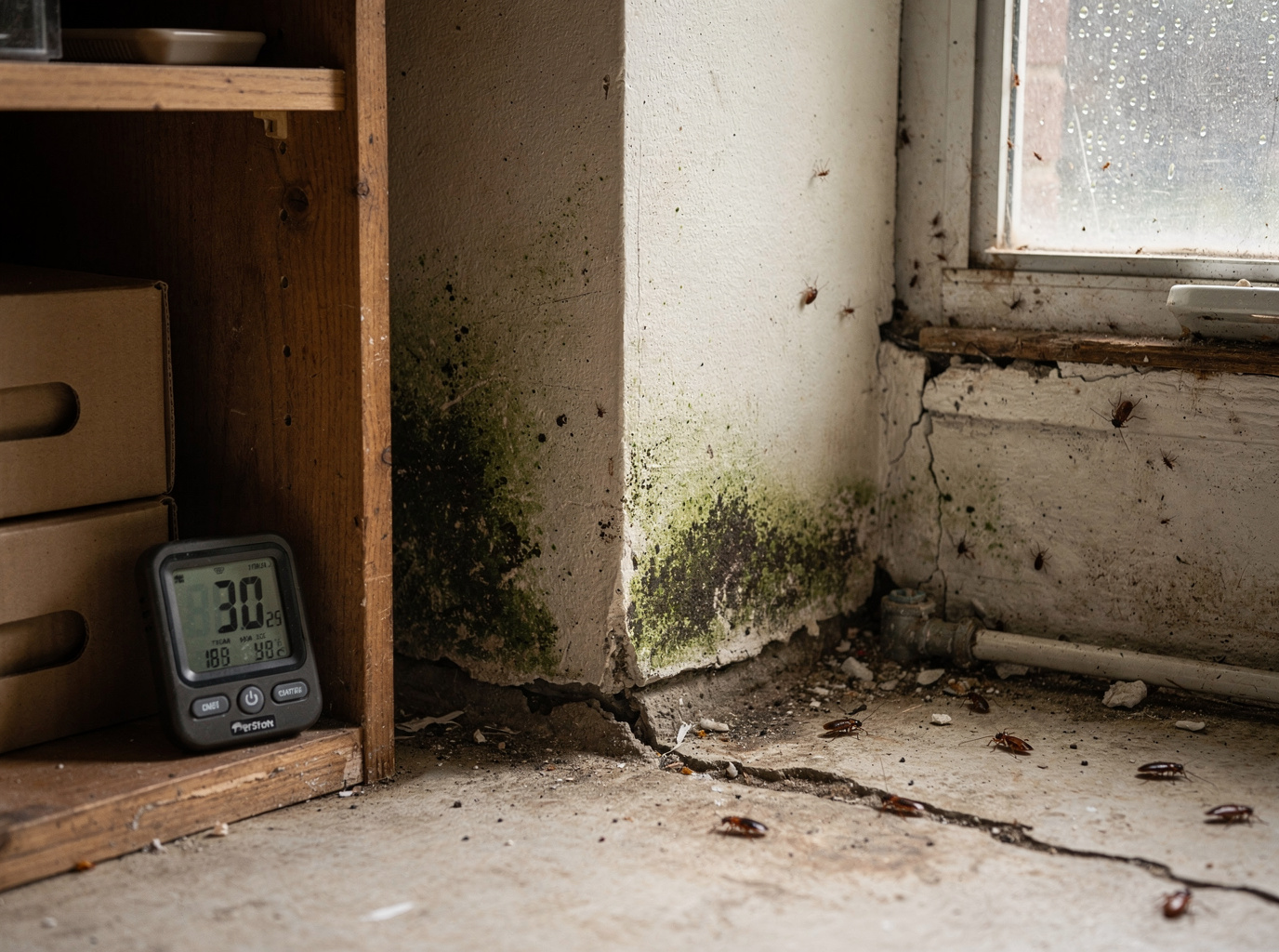
In Pryor's humid subtropical climate, relative humidity regularly climbs above 70% from May through September, pushing indoor mold growth once levels exceed 60% and allowing moisture-dependent pests such as termites and cockroaches to remain active year-round in homes built before 1980.
Humidity Patterns Across Mayes County
Pryor sits in a humid subtropical zone where hot summers combine with frequent rainfall to keep outdoor humidity between 65% and 85% for weeks at a time. Mild winters rarely drop below freezing long enough to dry out crawl spaces or wall cavities in the older frame houses that line streets around the Mayes County Courthouse. East Pryor properties near Pryor Creek Golf Course often sit on slightly lower ground where morning fog lingers, adding extra moisture that homeowners notice as musty odors by late June. The same pattern appears in nearby Claremore, Vinita, and Catoosa, where afternoon thunderstorms deliver brief but heavy rain that soaks siding and foundations before evaporating slowly in the humid air.
How Elevated Humidity Drives Mold Inside Pryor Homes
When indoor relative humidity stays above 60% for more than a few days, mold spores settle on drywall, baseboards, and carpet padding in bathrooms and laundry rooms common to Downtown Pryor homes. Older plaster walls absorb and release moisture slowly, creating hidden damp pockets behind cabinets that support black mold colonies within 48 to 72 hours. Homeowners in East Pryor report visible growth on north-facing exterior walls first because those surfaces receive less direct sun and retain humidity longer after summer storms. Without consistent airflow, even small leaks around windows or plumbing fixtures compound the problem, turning minor condensation into widespread surface mold by midsummer.
Moisture-Seeking Pests That Follow High Humidity
Termites and carpenter ants locate and follow moisture trails through soil and wood that stays damp because of sustained humidity levels above 65%. Cockroaches and silverfish hide in the same humid voids under sinks and behind refrigerators where mold provides both food and shelter. In Mayes County, these insects remain active longer into fall than in drier parts of Oklahoma because mild winters never fully interrupt their breeding cycles. Residents near the Pryor Creek Golf Course notice increased spider activity in garages during humid evenings when flying insects drawn to moisture become easy prey. Termite Control and Preventive Pest Control both address the root moisture conditions that keep these populations established.
Local Terrain and Housing Factors That Worsen Humidity Effects
Many homes in Downtown Pryor and East Pryor were built on clay-heavy soils that hold water after rain, keeping crawl-space humidity elevated even when outdoor air begins to dry. Narrow lots with mature trees limit airflow around foundations, trapping moisture against siding and creating entry points for carpenter ants. Storm drains along main roads through town often back up during heavy summer rains, sending water toward nearby properties and raising basement humidity for days afterward. The same drainage issues appear in Claremore and Catoosa, where older neighborhoods share similar soil and lot layouts. How Pryor Storm Drains Attract Mosquitoes explains how standing water from these events also supports additional pest breeding.
Monitoring and Reducing Indoor Humidity Year-Round
Place digital hygrometers in basements and bathrooms to track when levels cross 60%, the threshold where mold begins to grow on porous materials. Run exhaust fans during showers and cooking, then leave them on for 20 minutes afterward to pull humid air outside before it migrates into wall cavities. In East Pryor homes near the golf course, dehumidifiers sized for 50- to 70-pint daily removal often keep crawl spaces below the target range during peak summer months. Seal obvious cracks around plumbing penetrations and ensure gutters direct water at least 5 feet from the foundation to limit additional moisture entering the structure. These steps reduce the conditions that support both mold and the pests that follow it.