
2026-08-29 ·
How To Check Pryor Sheds For Rodent Signs
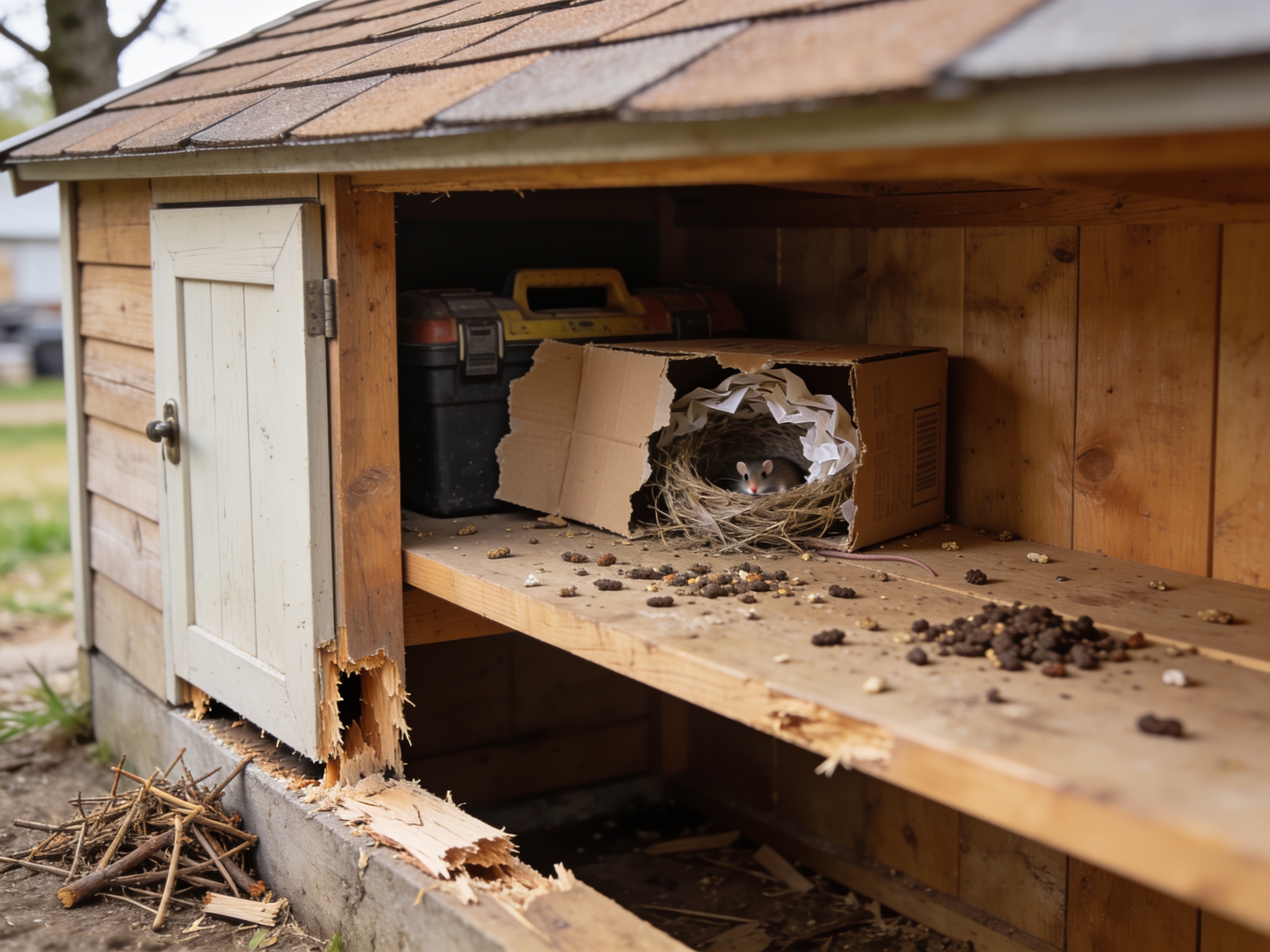
Homeowners in Pryor can spot rodent activity in sheds by checking for fresh droppings, urine stains, and gnaw marks on stored items within the first 15 minutes of a thorough walk-through. These signs appear regularly because the humid subtropical climate keeps food sources available year-round while mild winters allow mice and rats to remain active instead of entering deep hibernation.
Checking the Exterior First
Start at ground level around the shed perimeter in neighborhoods such as East Pryor. Look for 1/4-inch droppings near foundation gaps or under the door threshold. Rats often leave 1/2-inch droppings along the same paths. Examine siding and trim for fresh chew marks, especially where wood meets soil. In Downtown Pryor, older sheds built on concrete piers create crawl spaces that collect debris and provide cover. Check for rub marks along edges where fur leaves grease stains. These exterior clues usually lead directly to entry points that need sealing before interior inspection begins.
Examining the Interior Storage Areas
Open the shed door and let your eyes adjust before stepping inside. Scan shelves and floor surfaces for scattered seeds, pet food crumbs, or shredded paper used as nesting material. Pryor residents commonly store lawn equipment and holiday decorations that give rodents both food and shelter. Lift boxes carefully and check behind them for urine trails that glow under a black light. Count droppings to gauge activity level—more than 20 fresh pellets in one corner signals an established population. Note any musty odor that lingers even after ventilation, a common indicator in Mayes County outbuildings kept closed during hot summer months.
Tracking Seasonal Patterns
Rodent pressure increases in Pryor after the first cool nights in fall when mice move from fields into sheds. The same pattern repeats near Pryor Creek Golf Course where open land borders residential lots. During hot summers, rats seek water sources inside sheds, leaving tracks in dust near stored buckets or hoses. Mild winters mean activity never fully stops, so inspections every 60 days catch new arrivals before they multiply. Homeowners who also review related causes in rural settings often find overlapping entry points between sheds and homes.
Knowing When to Call for Help
If droppings appear larger than 1/2 inch or you hear scratching at night, contact local professional rodent control services for targeted trapping. Residents in East Pryor who find multiple entry holes larger than a quarter often need exclusion work around the entire structure. The same holds true for sheds near the Mayes County Courthouse area where older construction leaves more gaps. For additional prevention steps that apply to attics and other structures, see our guide on fall pest proofing tips for Pryor attics. Regular checks combined with proper storage keep most sheds rodent-free without repeated treatments.