
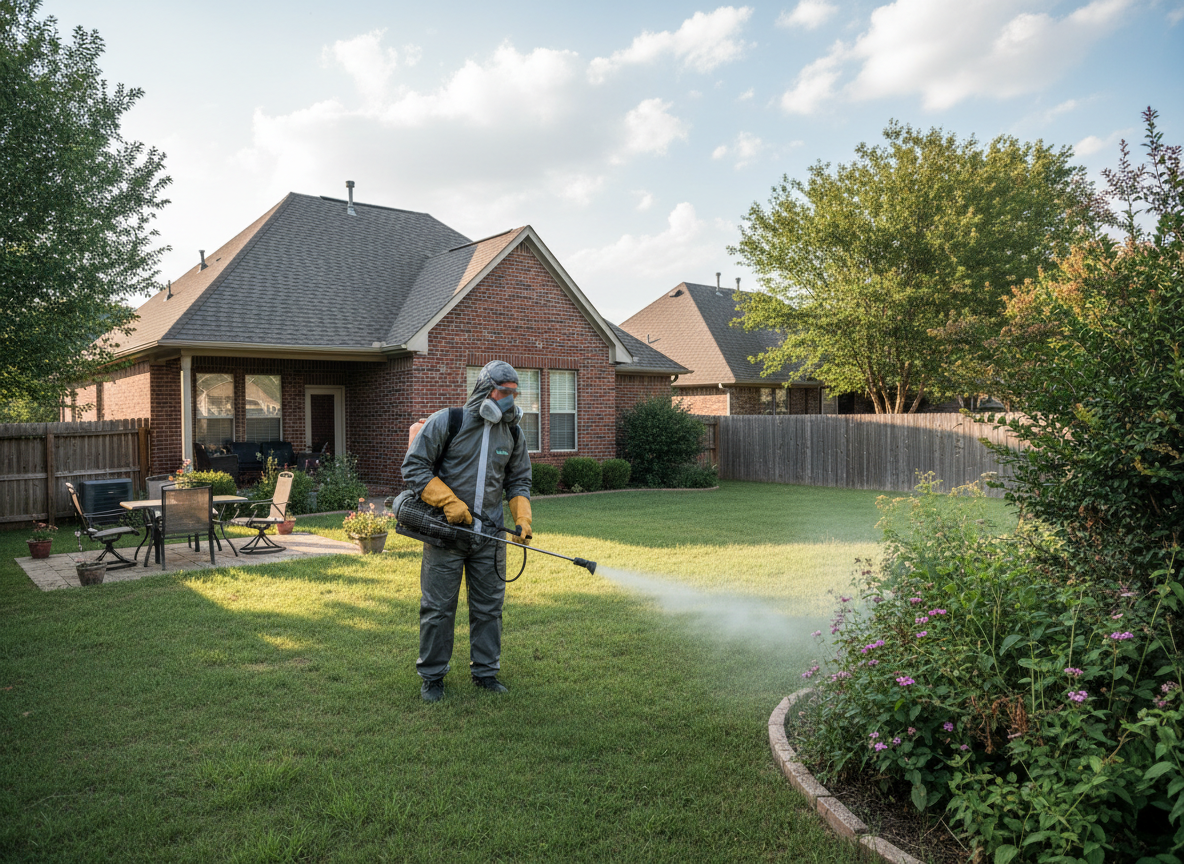
Pryor sits in a humid subtropical zone where hot summers and frequent rains create persistent standing water in yards, ditches, and low spots around older homes in Downtown Pryor and East Pryor. Mosquitoes breed quickly in these conditions, especially near the Pryor Creek Golf Course water features and drainage areas around the Mayes County Courthouse. Standard sprays alone rarely solve the issue because larvae develop in hidden spots that homeowners miss during routine property checks.
Effective control starts with locating and treating actual breeding sites rather than just knocking down flying adults. We use larvicides in water-holding areas and apply targeted barrier treatments to vegetation and structures that mosquitoes use for resting. Properties near Claremore, Vinita, and Catoosa often share similar drainage patterns that allow mosquitoes to move between neighboring lots, so we map treatment zones to break those travel paths.
Mild winters in Mayes County let some species remain active longer than in colder regions, so a single spring treatment rarely carries through the full season. Follow-up visits timed to local rain cycles keep populations from rebounding after heavy storms. Older housing stock in East Pryor frequently has clogged gutters and poor grading that holds water against foundations, creating year-round problems if left unaddressed.
We avoid blanket fogging that drifts onto non-target areas and instead focus on precise applications that respect local wind patterns and nearby waterways. This approach reduces callbacks while protecting pollinators and pets that frequent treated yards.
Technician insight
In Pryor the thing that catches most people out with mosquito control is how quickly mild winters and summer storms refill the same low spots behind older homes in East Pryor. Gutters on houses built before modern grading standards hold just enough water to keep breeding going even after we treat the yard, and that single detail forces us to check rooflines every time instead of assuming the ground is the only problem.
East Pryor Home Near Drainage Ditch
Heavy June rains left standing water along a shared ditch behind a 1960s house in East Pryor. Larvae were developing in the ditch and in clogged gutters that fed into it. We treated the water sources with larvicide, applied barrier sprays along the fence line, and advised the owner on a simple downspout extension. The homeowner reported far fewer bites during evening hours on the back patio within two weeks.
Mosquito Control Services We Offer
✓Breeding Site Elimination
Locate and treat standing water sources around foundations, ditches, and low spots common in Downtown Pryor and East Pryor yards to stop larvae before they mature.
✓Barrier Spray Applications
Apply residual treatments to shrubs, fences, and siding that create a protective zone mosquitoes cross when entering properties near Pryor Creek Golf Course.
✓Larvicide Placement
Use targeted larvicides in gutters, birdbaths, and drainage areas that persist through summer rains without affecting non-target wildlife.
✓Seasonal Maintenance Plans
Schedule repeat visits aligned with Mayes County weather patterns to maintain control from spring through the first hard frost.
✓Neighboring Property Coordination
Treat adjacent lots in East Pryor and near Claremore or Vinita to reduce mosquito movement between homes sharing drainage lines.
Mosquito Control Cost in Pryor, OK
| Service | Typical Range | What Affects It |
|---|---|---|
| Initial Inspection and Treatment | $125–$225 | Varies with lot size and number of water features |
| Seasonal Maintenance Visit | $85–$150 | Lower per visit when scheduled in advance |
| Barrier Spray Add-On | $50–$100 | Added when heavy vegetation or adjacent lots are involved |
Ranges are typical for Pryor, OK and confirmed with an exact written quote before any work starts.
How it works
- 1
Site Inspection
Walk the full property including outbuildings, low spots, and water features to map every breeding location.
- 2
Source Reduction
Remove or treat standing water and advise on simple grading fixes that prevent future pooling.
- 3
Targeted Treatment
Apply larvicides and barrier sprays only to confirmed problem zones using equipment suited to local terrain.
- 4
Follow-Up Monitoring
Return after heavy rains to check results and adjust coverage before populations rebound.
Pricing
Cost depends on property size, number of breeding sites, and whether multiple visits are required.